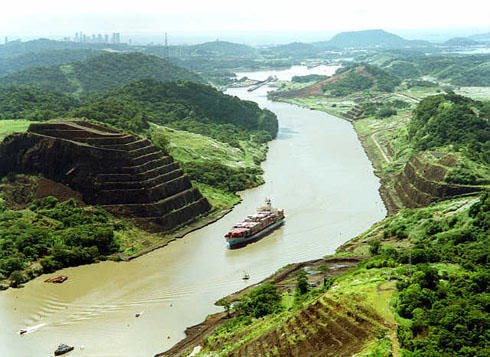
Panama Canal
Tuesday, June 19, 2012
Midterm 3 (DUE start of class on Thrusday June 21st)
TYPE complete definitions for the following terms:
1. Allied Powers
2. Axis Powers
3. Blitzkrieg
4. Concentration Camp
5. D-Day
6. Embargo
7. Insurgent, Insurgents
8. Manhattan Project
9. Potsdam Conference
10. Third Reich
11. Yalta Conference
12. Fascism
13. Nazi-Soviet Pack
14. Manhattan Project
15. Operation Barbarossa
16. Miracle at Dunkirk
17. Hiroshima, Nagasaki
18. Joseph Stalin
19. Franklin Delano Roosevelt
20. Emperor Hirohito
21. Winston Churchill
22. Erwin Rommel
23. Joseph Mengele
24. Code talkers
25. Propaganda
26. Battle of Stalingrad
27. Pearl Harbor
28. Battle of Midway
29. Death Toll
30. Nazi medical experiments
31. Final Solution
32. Nuremberg Trials
33. Crimes Against Humanity
34. Atomic Bomb
35. Gas Chamber
MUST BE TYPED - no late work, no emailed work

Monday, June 11, 2012
PP Notes Latin America
Latin America
Forces of reaction and revolution
Economic challenges
Cultural and political identity
Industrialization
Global interests in its’ financial potential
Minimal involvement in WWII
Economy had grown
Cold War stimulated revolutionary idealists
U.S. disliked radicalism
By 1945 more nations would face authoritarian rule
Cuba
Improved: housing, education, health
Failed industrialization
Weakened economy
Involved in the Cold War
Long term problems with U.S.
Economic frustration after fall of USSR
Displacement internationally
Mexico
Party of Institutionalized Revolution
Maintained control and organization
Became very corrupt and practiced repression
Social tension and injustice
Economic failure
1990 Mexico joined NAFTA
2000 ended PRI rule
CHILE
Democracy
Longest running democracy
Economic crisis
Natural disasters
Large disparity in standard of living
Cuba’s example
Revolutionary groups
The CIA was authorized to spend U.S. $8 million to secure the overthrow of Allende; and given the black market price of dollars this was probably worth closer to $40 million. In addition, U.S. loans were cut off; the United States used its influence to block loans from the World Bank and Inter-American Development Bank: it tried to obstruct renegotiation of the Chilean debt; short-term credits from U.S. banks dried up; and the North American copper companies took legal action against Chile to block exports of copper to Europe [This was a reaction due to the appropriation of their mine sites in Chile]. There was, of course, substantial borrowing, particularly from other Latin American countries, and important financial aid was given by credits for long-term development, including a total of U.S. $500 million from the Soviet bloc, were nearly all unspent at the time of the coup. There may not have been a blockade by the United States, but there was a virtual boycott, and the effect on an economy so tied to the U.S. economic system could not but produce serious dislocation. (sic) (Bethell 167)
Move to capitalism
Shift in cultural identity
Purging of education, censorship, curfews, persecution of socialists, secret police (DINA), prison and torture
Absolute dictatorship until October 1989
Political Responses
Liberal democracy
One-party rule
Populist government
Populist nationals
Reformist nationalists
Military government
Communist government
Forces of reaction and revolution
Economic challenges
Cultural and political identity
Industrialization
Global interests in its’ financial potential
Minimal involvement in WWII
Economy had grown
Cold War stimulated revolutionary idealists
U.S. disliked radicalism
By 1945 more nations would face authoritarian rule
Cuba
Improved: housing, education, health
Failed industrialization
Weakened economy
Involved in the Cold War
Long term problems with U.S.
Economic frustration after fall of USSR
Displacement internationally
Mexico
Party of Institutionalized Revolution
Maintained control and organization
Became very corrupt and practiced repression
Social tension and injustice
Economic failure
1990 Mexico joined NAFTA
2000 ended PRI rule
CHILE
Democracy
Longest running democracy
Economic crisis
Natural disasters
Large disparity in standard of living
Cuba’s example
Revolutionary groups
The CIA was authorized to spend U.S. $8 million to secure the overthrow of Allende; and given the black market price of dollars this was probably worth closer to $40 million. In addition, U.S. loans were cut off; the United States used its influence to block loans from the World Bank and Inter-American Development Bank: it tried to obstruct renegotiation of the Chilean debt; short-term credits from U.S. banks dried up; and the North American copper companies took legal action against Chile to block exports of copper to Europe [This was a reaction due to the appropriation of their mine sites in Chile]. There was, of course, substantial borrowing, particularly from other Latin American countries, and important financial aid was given by credits for long-term development, including a total of U.S. $500 million from the Soviet bloc, were nearly all unspent at the time of the coup. There may not have been a blockade by the United States, but there was a virtual boycott, and the effect on an economy so tied to the U.S. economic system could not but produce serious dislocation. (sic) (Bethell 167)
Move to capitalism
Shift in cultural identity
Purging of education, censorship, curfews, persecution of socialists, secret police (DINA), prison and torture
Absolute dictatorship until October 1989
Political Responses
Liberal democracy
One-party rule
Populist government
Populist nationals
Reformist nationalists
Military government
Communist government
Brief History of China
A Brief History of China: Democracy or Communist Bureaucracy?
Published on: Jun, 07, 2008
by: Rob Handfield, SCRC
Just recently, the Wall Street Journal published an article stating the incredible growth in automotive component manufacturing in China, as well as other industries. Many people are mystified by the details of how to do business in China. In particular, many people ask me about the chances for reform, and what it means as growth continues to occur. Is China a democracy? What is the impact of communism? What do I need to know if I do business in China?
One of the important elements that any visiting executive should think about before going to China is an understanding of the political history that has led to the position of China today. One of my recently graduated MBA students, Hao Xie, educated me with a brief history lesson that I will share with you. Hao is now dutifully employed at Chevron, working on procurement best practices with the company’s CPO.
Before 1911, China was still characterized as a feudalistic economy run by the Qing authorities. Even by 1949, China was primarily an agricultural economy. However, colonial capitalism did have a long and significant impact in some coastal cities, Shanghai and Guangzhou in particular.
The general economic condition of the nation was terribly bad because of the World War II and continuous civil wars. A crucial reason why Jiang Jieshi did not defeat Mao Zedong was that the capitalist economy was just forming and the industrial power was still very weak in most parts of China.
From 1949 – 1978, China, for the first time, systematically built its industrial base and transformed itself from an agricultural economy to an industrial one. The period between 1949 and 1956 was recognized as the golden period of Chinese industrialization, as the country established its primary industries including steel, automobile, textile, chemical, and defense. The GDP grew at the rate of over 20% per year.
Because of over-optimism, Mao made his first huge mistake by summoning his nation to speed up the industrialization. This was the “Great Leap”, which resulted in the significant economic recession in 1958 and 1959 and also the disaster in early 1960s.
The economy recovered, however, under the leadership of Liu Shaoqi in the early 1960s. As Liu accumulated much power in the communist party, Mao felt a threat from him and made his second huge mistake by starting the famous “Cultural Revolution” to suppress Liu and his followers, including Deng Xiaoping.
Nevertheless, it was during this period when China as a nation, rather than in a few cities, started its industrialization, though a lot of ups and downs. China created its college system and built hundreds of national labs throughout the country, and developed its most advanced technology under Mao’s dictation, such as nuclear weapons, satellites and rocket science, and super computers. Under his dictation, the most talented Chinese students chose science and engineering majors instead of law or economics, which Mao saw as trouble-making majors. This, maybe unintentionally, prepared today’s China with many talented scientists and engineers, many of whom became the technocrats in the government.
If Mao was the person who led the Chinese to the entrance of the industrial highway, Deng was the one who led the Chinese to drive on the highway. During this period, China has grown at a rate of over 10% per year. It is a common mistake that many Americans believe the rapid growth in China only happened in recent years. Jiang basically continued Deng’s philosophy, and harvested the fruits of the economic reform started by his predecessors.
During this period, China started to migrate from the economy of import-substituting to export-led. Jiang, originally from the Shanghai area, also did a lot of favors to his home city, and helped it overshadow the rapid development of Guangdong Province, where Deng first tested his pro-capitalism economic policy and has been open to the West since 1979.
Like Japan and the US, the power of China was not built overnight, but was a cumulative growth over the past 50 years. Though China has experienced rapid economic growth for over 25 years, most western countries paid attention to it only after its entry into WTO and the hosting of the 2008 Olympics.
Further, the CIA World Fact Book confirms the impact of these changes on the economy and its growth. Specifically, they note that:
The restructuring of the economy and resulting efficiency gains have contributed to a more than tenfold increase in GDP since 1978. Measured on a purchasing power parity (PPP) basis, China in 2005 stood as the second-largest economy in the world after the US, although in per capita terms the country is still lower middle-income and 150 million Chinese fall below international poverty lines.
Economic development has generally been more rapid in coastal provinces than in the interior, and there are large disparities in per capita income between regions. The government has struggled to: (a) sustain adequate job growth for tens of millions of workers laid off from state-owned enterprises, migrants, and new entrants to the work force; (b) reduce corruption and other economic crimes; and © contain environmental damage and social strife related to the economy’s rapid transformation.
From 100 to 150 million surplus rural workers are adrift between the villages and the cities, many subsisting through part-time, low-paying jobs. One demographic consequence of the “one child” policy is that China is now one of the most rapidly aging countries in the world.
Another long-term threat to growth is the deterioration in the environment – notably air pollution, soil erosion, and the steady fall of the water table, especially in the north. China continues to lose arable land because of erosion and economic development. China has benefited from a huge expansion in computer Internet use, with more than 100 million users at the end of 2005. Foreign investment remains a strong element in China’s remarkable expansion in world trade and has been an important factor in the growth of urban jobs.
In July 2005, China revalued its currency by 2.1% against the US dollar and moved to an exchange rate system that references a basket of currencies. Reports of shortages of electric power in the summer of 2005 in southern China receded by September-October and did not have a substantial impact on China’s economy. More power generating capacity is scheduled to come on line in 2006 as large scale investments are completed. Thirteen years in construction at a cost of $24 billion, the immense Three Gorges Dam across the Yangtze River will be essentially completed in 2006 and will revolutionize electrification and flood control in the area.
The Central Committee of the Chinese Communist Party in October 2005 approved the draft 11th Five-Year Plan and the National People’s Congress is expected to give final approval in March 2006. The plan calls for a 20% reduction in energy consumption per unit of GDP by 2010 and an estimated 45% increase in GDP by 2010. The plan states that conserving resources and protecting the environment are basic goals, but it lacks details on the policies and reforms necessary to achieve these goals.
Whew! That was a very brief lesson, but enough to help you understand the diverse set of political and economic forces at work.
Published on: Jun, 07, 2008
by: Rob Handfield, SCRC
Just recently, the Wall Street Journal published an article stating the incredible growth in automotive component manufacturing in China, as well as other industries. Many people are mystified by the details of how to do business in China. In particular, many people ask me about the chances for reform, and what it means as growth continues to occur. Is China a democracy? What is the impact of communism? What do I need to know if I do business in China?
One of the important elements that any visiting executive should think about before going to China is an understanding of the political history that has led to the position of China today. One of my recently graduated MBA students, Hao Xie, educated me with a brief history lesson that I will share with you. Hao is now dutifully employed at Chevron, working on procurement best practices with the company’s CPO.
Before 1911, China was still characterized as a feudalistic economy run by the Qing authorities. Even by 1949, China was primarily an agricultural economy. However, colonial capitalism did have a long and significant impact in some coastal cities, Shanghai and Guangzhou in particular.
The general economic condition of the nation was terribly bad because of the World War II and continuous civil wars. A crucial reason why Jiang Jieshi did not defeat Mao Zedong was that the capitalist economy was just forming and the industrial power was still very weak in most parts of China.
From 1949 – 1978, China, for the first time, systematically built its industrial base and transformed itself from an agricultural economy to an industrial one. The period between 1949 and 1956 was recognized as the golden period of Chinese industrialization, as the country established its primary industries including steel, automobile, textile, chemical, and defense. The GDP grew at the rate of over 20% per year.
Because of over-optimism, Mao made his first huge mistake by summoning his nation to speed up the industrialization. This was the “Great Leap”, which resulted in the significant economic recession in 1958 and 1959 and also the disaster in early 1960s.
The economy recovered, however, under the leadership of Liu Shaoqi in the early 1960s. As Liu accumulated much power in the communist party, Mao felt a threat from him and made his second huge mistake by starting the famous “Cultural Revolution” to suppress Liu and his followers, including Deng Xiaoping.
Nevertheless, it was during this period when China as a nation, rather than in a few cities, started its industrialization, though a lot of ups and downs. China created its college system and built hundreds of national labs throughout the country, and developed its most advanced technology under Mao’s dictation, such as nuclear weapons, satellites and rocket science, and super computers. Under his dictation, the most talented Chinese students chose science and engineering majors instead of law or economics, which Mao saw as trouble-making majors. This, maybe unintentionally, prepared today’s China with many talented scientists and engineers, many of whom became the technocrats in the government.
If Mao was the person who led the Chinese to the entrance of the industrial highway, Deng was the one who led the Chinese to drive on the highway. During this period, China has grown at a rate of over 10% per year. It is a common mistake that many Americans believe the rapid growth in China only happened in recent years. Jiang basically continued Deng’s philosophy, and harvested the fruits of the economic reform started by his predecessors.
During this period, China started to migrate from the economy of import-substituting to export-led. Jiang, originally from the Shanghai area, also did a lot of favors to his home city, and helped it overshadow the rapid development of Guangdong Province, where Deng first tested his pro-capitalism economic policy and has been open to the West since 1979.
Like Japan and the US, the power of China was not built overnight, but was a cumulative growth over the past 50 years. Though China has experienced rapid economic growth for over 25 years, most western countries paid attention to it only after its entry into WTO and the hosting of the 2008 Olympics.
Further, the CIA World Fact Book confirms the impact of these changes on the economy and its growth. Specifically, they note that:
The restructuring of the economy and resulting efficiency gains have contributed to a more than tenfold increase in GDP since 1978. Measured on a purchasing power parity (PPP) basis, China in 2005 stood as the second-largest economy in the world after the US, although in per capita terms the country is still lower middle-income and 150 million Chinese fall below international poverty lines.
Economic development has generally been more rapid in coastal provinces than in the interior, and there are large disparities in per capita income between regions. The government has struggled to: (a) sustain adequate job growth for tens of millions of workers laid off from state-owned enterprises, migrants, and new entrants to the work force; (b) reduce corruption and other economic crimes; and © contain environmental damage and social strife related to the economy’s rapid transformation.
From 100 to 150 million surplus rural workers are adrift between the villages and the cities, many subsisting through part-time, low-paying jobs. One demographic consequence of the “one child” policy is that China is now one of the most rapidly aging countries in the world.
Another long-term threat to growth is the deterioration in the environment – notably air pollution, soil erosion, and the steady fall of the water table, especially in the north. China continues to lose arable land because of erosion and economic development. China has benefited from a huge expansion in computer Internet use, with more than 100 million users at the end of 2005. Foreign investment remains a strong element in China’s remarkable expansion in world trade and has been an important factor in the growth of urban jobs.
In July 2005, China revalued its currency by 2.1% against the US dollar and moved to an exchange rate system that references a basket of currencies. Reports of shortages of electric power in the summer of 2005 in southern China receded by September-October and did not have a substantial impact on China’s economy. More power generating capacity is scheduled to come on line in 2006 as large scale investments are completed. Thirteen years in construction at a cost of $24 billion, the immense Three Gorges Dam across the Yangtze River will be essentially completed in 2006 and will revolutionize electrification and flood control in the area.
The Central Committee of the Chinese Communist Party in October 2005 approved the draft 11th Five-Year Plan and the National People’s Congress is expected to give final approval in March 2006. The plan calls for a 20% reduction in energy consumption per unit of GDP by 2010 and an estimated 45% increase in GDP by 2010. The plan states that conserving resources and protecting the environment are basic goals, but it lacks details on the policies and reforms necessary to achieve these goals.
Whew! That was a very brief lesson, but enough to help you understand the diverse set of political and economic forces at work.
PP Notes Panama Canal
The Panama Canal
1914 The first ship to pass through the canal (SS Ancon)
In 1869, Suez Canal was completed: this is where the idea for the Panama Canal began
1881 Ferdinand de Lesseps starts work on the Canal
1884 French have over 19,000 working on the Canal project
1881-1889 Disease runs rampant: Malaria, Yellow Fever and Typhoid (death toll: 22,000)
1889 de Lesseps’ can no longer manage the financial aspects of the project and he declares bankrupcy
1894 New French Company attempts to restart the venture, but is unsuccessful (retain ownership)
1898 Americans send battleship Oregon around South America to aid attack against Cuba in Spanish American War (thus an understanding of the importance of a canal project)
1902 Roosevelt Administration decides to make a trans-oceanic canal a national priority
1903 “Panamanians” (very minor group, encouraged by International Interests) revolt from Columbia and declare independence; US maintains rights to Canal
1904 John F. Wallace named first American Chief Engineer
1905 John F. Stevens succeeds Wallace and introduces plans for a LOCK system with Gatun Lake included in pathway
1906 Army Engineer COL George W. Goethals succeeds Stevens and essentially completes his plan, overcoming enormous health and landslide problems
August 1914 the first vessel transits the new Panama Canal, just as World War I erupts
Life for Workers
Streets and areas were without sewage and water. This is an example of a street before American occupation and then after.
Workers were shipped in from all over the world. Housing and food was provided with wages (but weren’t very high)
Quarantine for a Yellow Fever victim
Fighting Mosquitoes (Disease)
The canal could not be completed until sanitation problems were solved (Dr. William Gorgas took upon himself the cause of discovering and then fighting the transfer of disease.)
The Big Cut at Culebra
One of the largest and most difficult incisions was along the Continental Divide near Culebra, where they had to cut through volcanic rock
Culebra Cut had numerous landslides, requiring more than 5 times the original excavation.
Engineering challenges and solutions that had never been done before in every aspect of the Canal’s development
The impossible was tried: mechanically, financially, medically, and geographically
To handle the millions of tons of stone, sand, and cement required for building the locks, ingenious machinery has been installed which automatically selects the right proportions of stone, sand, and cement and mixes the material. The piles in the foreground in the above picture are sand; the darker piles on the further side of the railway track are stone. Grab-buckets shoot down from the arms of the crane, bite into the piles, shoot back to the crane, and feed their loads into the mixer, where cement has been already delivered in bags or barrels.)
1914 The first ship to pass through the canal (SS Ancon)
In 1869, Suez Canal was completed: this is where the idea for the Panama Canal began
1881 Ferdinand de Lesseps starts work on the Canal
1884 French have over 19,000 working on the Canal project
1881-1889 Disease runs rampant: Malaria, Yellow Fever and Typhoid (death toll: 22,000)
1889 de Lesseps’ can no longer manage the financial aspects of the project and he declares bankrupcy
1894 New French Company attempts to restart the venture, but is unsuccessful (retain ownership)
1898 Americans send battleship Oregon around South America to aid attack against Cuba in Spanish American War (thus an understanding of the importance of a canal project)
1902 Roosevelt Administration decides to make a trans-oceanic canal a national priority
1903 “Panamanians” (very minor group, encouraged by International Interests) revolt from Columbia and declare independence; US maintains rights to Canal
1904 John F. Wallace named first American Chief Engineer
1905 John F. Stevens succeeds Wallace and introduces plans for a LOCK system with Gatun Lake included in pathway
1906 Army Engineer COL George W. Goethals succeeds Stevens and essentially completes his plan, overcoming enormous health and landslide problems
August 1914 the first vessel transits the new Panama Canal, just as World War I erupts
Life for Workers
Streets and areas were without sewage and water. This is an example of a street before American occupation and then after.
Workers were shipped in from all over the world. Housing and food was provided with wages (but weren’t very high)
Quarantine for a Yellow Fever victim
Fighting Mosquitoes (Disease)
The canal could not be completed until sanitation problems were solved (Dr. William Gorgas took upon himself the cause of discovering and then fighting the transfer of disease.)
The Big Cut at Culebra
One of the largest and most difficult incisions was along the Continental Divide near Culebra, where they had to cut through volcanic rock
Culebra Cut had numerous landslides, requiring more than 5 times the original excavation.
Engineering challenges and solutions that had never been done before in every aspect of the Canal’s development
The impossible was tried: mechanically, financially, medically, and geographically
To handle the millions of tons of stone, sand, and cement required for building the locks, ingenious machinery has been installed which automatically selects the right proportions of stone, sand, and cement and mixes the material. The piles in the foreground in the above picture are sand; the darker piles on the further side of the railway track are stone. Grab-buckets shoot down from the arms of the crane, bite into the piles, shoot back to the crane, and feed their loads into the mixer, where cement has been already delivered in bags or barrels.)
PP Notes Mao
China under Mao Zedong 1949 - 1976
Outline
GMD-CCP Civil War (1946-1949)
Recovery and Socialism (1949-1956)
Rethinking the Soviet model (1956-1957)
Great Leap Forward (1958-1961)
Recovery & growing elite division (1962-5)
Great Proletarian Cultural Revolution (1966-1976)
Anti-Japanese War (1937-1945)
Civil War (1946 – 1949)
GMD: Guomindang (Nationalist Party)
Chiang Kai-shek (President)
CCP: Chinese Communist Party
Mao Zedong
“War of Liberation”
Mao Zedong
A revolution to remove “3 big mountains”
imperialism
feudalism
bureaucrat-capitalism
A “United Front” of …
workers
peasants
petty bourgeoisie and national bourgeoisie
People’s Republic of China
1949-10-01, PRC, Beijing
Chairman: Mao Zedong
5-Star Red Flag
Republic of China government retreated to Taiwan
Economic Reconstruction 1950s
Soviet Union model and assistance
land reform (eliminate landlord class)
heavy industry (state-owned enterprises)
First National People’s Congress (1954)
PRC Constitution
Zhou Enlai
Premier
Foreign Minister
Great Leap Forward (1958-1960)
abandon the Soviet model of economic development
Soviet “scientific planning”
mass mobilization
people’s communes
Great Leap Forward (1958-1960)
unrealistic output targets
industry
agricultural and human disaster
Growing Division (1962-1965)
Mao Zedong vs. Liu Shaoqi and Deng Xiaoping
charismatic leadership vs. bureaucracy
Cultural Revolution (1966-1976)
Great Proletarian Cultural Revolution
commitment to revolution and “class struggle”
power struggle to succeed Mao
Phase I: the rise and fall of “red guards”
Phase II: the rise and fall of Lin Biao
Phase III: the rise and fall of the “Gang of Four”
Phase I: Red Guards (1966-69)
Phase I: Red Guards (1966-69)
Purge of party cadres
Liu Shaoqi and Deng Xiaoping
Purge of intellectuals
Phase II: Lin Biao (1969-71)
the putative successor to Mao Zedong
the cult of personality around Mao
In 1971 Lin allegedly tried but failed
to assassinate Mao
to flee to Soviet Union (“9.13”)
“9.13” eroded the credibility
of the entire leadership
of the Cultural Revolution
Phase III: the “Gang of Four”
1972 – 1976
power struggle between
the radical “Gang of Four”, led by Jiang Qing, Mao’s wife
the “moderates”, led by Premier Zhou Enlai
the fate of Deng Xiaoping
Diplomatic Breakthrough
1971, PRC became the representative of China in UN (replaced ROC)
Diplomatic Breakthrough
1972, President Nixon visited Beijing
Mao and Zhou Died in 1976
Turning point in China’s postwar era
“Gang of Four” were arrested
End of the Cultural Revolution
Mao’s legacies
Reforms and Opening up
The 3rd Plenum of the 11th CCP Central Committee in 1978
Deng Xiaoping’s ascendancy
economic modernization became focus
US-PRC diplomatic relations in 1979
Outline
GMD-CCP Civil War (1946-1949)
Recovery and Socialism (1949-1956)
Rethinking the Soviet model (1956-1957)
Great Leap Forward (1958-1961)
Recovery & growing elite division (1962-5)
Great Proletarian Cultural Revolution (1966-1976)
Anti-Japanese War (1937-1945)
Civil War (1946 – 1949)
GMD: Guomindang (Nationalist Party)
Chiang Kai-shek (President)
CCP: Chinese Communist Party
Mao Zedong
“War of Liberation”
Mao Zedong
A revolution to remove “3 big mountains”
imperialism
feudalism
bureaucrat-capitalism
A “United Front” of …
workers
peasants
petty bourgeoisie and national bourgeoisie
People’s Republic of China
1949-10-01, PRC, Beijing
Chairman: Mao Zedong
5-Star Red Flag
Republic of China government retreated to Taiwan
Economic Reconstruction 1950s
Soviet Union model and assistance
land reform (eliminate landlord class)
heavy industry (state-owned enterprises)
First National People’s Congress (1954)
PRC Constitution
Zhou Enlai
Premier
Foreign Minister
Great Leap Forward (1958-1960)
abandon the Soviet model of economic development
Soviet “scientific planning”
mass mobilization
people’s communes
Great Leap Forward (1958-1960)
unrealistic output targets
industry
agricultural and human disaster
Growing Division (1962-1965)
Mao Zedong vs. Liu Shaoqi and Deng Xiaoping
charismatic leadership vs. bureaucracy
Cultural Revolution (1966-1976)
Great Proletarian Cultural Revolution
commitment to revolution and “class struggle”
power struggle to succeed Mao
Phase I: the rise and fall of “red guards”
Phase II: the rise and fall of Lin Biao
Phase III: the rise and fall of the “Gang of Four”
Phase I: Red Guards (1966-69)
Phase I: Red Guards (1966-69)
Purge of party cadres
Liu Shaoqi and Deng Xiaoping
Purge of intellectuals
Phase II: Lin Biao (1969-71)
the putative successor to Mao Zedong
the cult of personality around Mao
In 1971 Lin allegedly tried but failed
to assassinate Mao
to flee to Soviet Union (“9.13”)
“9.13” eroded the credibility
of the entire leadership
of the Cultural Revolution
Phase III: the “Gang of Four”
1972 – 1976
power struggle between
the radical “Gang of Four”, led by Jiang Qing, Mao’s wife
the “moderates”, led by Premier Zhou Enlai
the fate of Deng Xiaoping
Diplomatic Breakthrough
1971, PRC became the representative of China in UN (replaced ROC)
Diplomatic Breakthrough
1972, President Nixon visited Beijing
Mao and Zhou Died in 1976
Turning point in China’s postwar era
“Gang of Four” were arrested
End of the Cultural Revolution
Mao’s legacies
Reforms and Opening up
The 3rd Plenum of the 11th CCP Central Committee in 1978
Deng Xiaoping’s ascendancy
economic modernization became focus
US-PRC diplomatic relations in 1979
PP Notes USSR
Stalin
Born in Georgia in 1879
Learned Russian at school
Attended a seminary
Became a professional revolutionary and would spend years in Siberia
In 1924 was promoted after Lenin’s death
Dictatorship: strengthened military, poor conditions for the masses, Great Terror of 1930s, Gulags
Negotiated agreements with Germany during WWII
Supply lines went directly into Germany
Secretly cultivated an understanding with the West
Hitler’s attack in June 1941
Soviet Union
Eisenhower and Khrushchev
1970 elected to the USSR Supreme Soviet
Change foreign policy regarding nuclear arms
Negotiated nuclear free zone (s) with President Ronald Reagan of the U.S.
Feb 7, 1990 ended 72 years of communist rule
1990-91 President of the USSR
1991 Fall of Communism and the Soviet State
The Fall of Communism
Economy deteriorated
Poor living conditions, frustrated population
Government control of church
High rates of alcoholism and crime
Women lacked equality
Ethnic strife, poor medical care, rigid education
Pressure from hard-line communists, free market supporters, nationalists and secessionists
Born in Georgia in 1879
Learned Russian at school
Attended a seminary
Became a professional revolutionary and would spend years in Siberia
In 1924 was promoted after Lenin’s death
Dictatorship: strengthened military, poor conditions for the masses, Great Terror of 1930s, Gulags
Negotiated agreements with Germany during WWII
Supply lines went directly into Germany
Secretly cultivated an understanding with the West
Hitler’s attack in June 1941
Soviet Union
Eisenhower and Khrushchev
1970 elected to the USSR Supreme Soviet
Change foreign policy regarding nuclear arms
Negotiated nuclear free zone (s) with President Ronald Reagan of the U.S.
Feb 7, 1990 ended 72 years of communist rule
1990-91 President of the USSR
1991 Fall of Communism and the Soviet State
The Fall of Communism
Economy deteriorated
Poor living conditions, frustrated population
Government control of church
High rates of alcoholism and crime
Women lacked equality
Ethnic strife, poor medical care, rigid education
Pressure from hard-line communists, free market supporters, nationalists and secessionists
Subscribe to:
Posts (Atom)